

Cost Per Click (CPC) is one of the most important metrics in digital advertising because it tells you plainly how much you pay every time someone clicks your ad. Whether you run Google Ads, Microsoft Ads (Bing), Facebook/Instagram Ads, LinkedIn Ads, or even display campaigns, CPC helps you understand the relationship between your budget and the traffic you’re buying.
But CPC is more than “a number.” It’s a signal. A high CPC can mean strong competition or poor relevance. A low CPC can mean efficient targeting or low-intent traffic. To use CPC properly, you need to connect it to the business outcome: leads, sales, bookings, and revenue.
This guide explains CPC clearly, shows how it’s calculated, how it differs across platforms, what influences it, and how to lower it without sacrificing quality plus how Trech Hub can help you turn clicks into customers.
What Is Cost Per Click (CPC)?
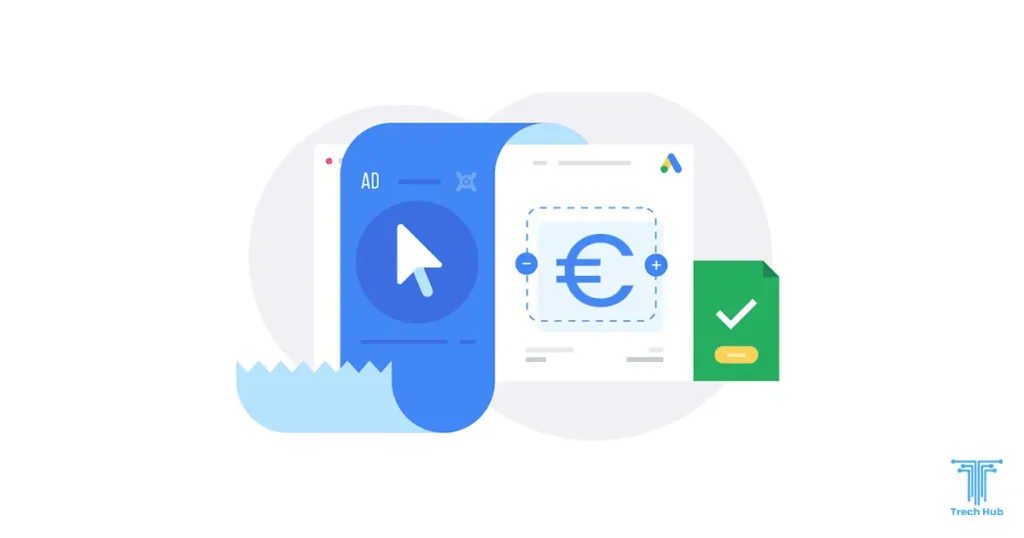
Cost Per Click (CPC) is the amount you pay to an advertising platform when a user clicks your ad.
CPC is used in pay-per-click (PPC) advertising. You don’t pay for impressions (views) alone, you pay when someone clicks.
CPC Formula
The most common CPC formula is:
CPC = Total Ad Spend ÷ Total Clicks
Example
- Spend: €500
- Clicks: 250
- CPC = €500 ÷ 250 = €2.00 per click
CPC vs. Related PPC Metrics
CPC is often confused with other metrics. Here’s how to separate them.
| Metric | What it measures | Why it matters |
| CPC | Cost per click | Traffic cost efficiency |
| CPM | Cost per 1,000 impressions | Brand awareness + reach |
| CTR | Click-through rate | Relevance and ad appeal |
| CVR | Conversion rate | Landing page + offer effectiveness |
| CPA | Cost per acquisition (lead/sale) | True business cost per result |
| ROAS | Return on ad spend | Revenue performance |
Important: A “good” CPC is not the lowest CPC, it’s the CPC that produces profitable conversions.
Average CPC: What’s “Normal”?
CPC varies massively by:
- industry (legal and finance are usually expensive)
- location (bidding competition differs by country/city)
- platform (LinkedIn often costs more per click than Meta)
- keyword intent (high-intent terms cost more)
- audience targeting (narrow audiences can increase CPC)
Instead of chasing a universal benchmark, set your own baseline using your data and improve it over time.
How CPC Works in Google Ads (and Similar Platforms)
In many search ad platforms, your CPC is influenced by an auction. You’re not always paying your maximum bid your actual CPC depends on:
- your bid
- competitors’ bids
- your Quality Score / Ad Rank components
- expected click-through rate
- ad relevance
- landing page experience
This is why two advertisers can bid the same amount and get very different CPCs.
What Affects CPC? (The Key Drivers)
Here are the most common factors that raise or lower CPC:
1) Competition
More advertisers fighting for the same audience/keywords increases CPC.
2) Audience intent (commercial value)
Keywords like “buy,” “hire,” “near me,” and “price” usually cost more because they convert better.
3) Ad relevance and creative quality
If your ad doesn’t match the user’s intent, your CTR drops and CPC often rises.
4) Landing page experience
A slow page, unclear message, or poor mobile UX can increase costs and reduce conversions.
5) Targeting choices
Very narrow targeting can raise CPC. Too broad targeting can lower CPC but bring irrelevant clicks.
6) Seasonality
During peak seasons (holidays, summer travel, Black Friday), CPC often increases.
CPC Benchmarks by Platform
These are typical patterns (not guarantees). Use them to understand expectations.
| Platform | Typical CPC pattern | Best for |
| Google Search Ads | Medium–High | High-intent leads/sales |
| Microsoft Ads (Bing) | Often lower than Google | Cost-efficient search volume |
| Meta (Facebook/Instagram) | Often lower, but varies | Demand generation + retargeting |
| LinkedIn Ads | Usually high | B2B lead gen + job titles |
| Display Ads | Low CPC but lower intent | Awareness + retargeting |
The “CPC Trap”: Cheap Clicks That Don’t Convert
A low CPC feels good, but it can be misleading. What matters is whether clicks turn into results.
Use this quick evaluation framework:
| If CPC is… | And conversions are… | What it likely means |
| Low | Low | Low-intent targeting or weak landing page |
| High | High | Competitive market, but strong intent (can still be profitable) |
| High | Low | Poor relevance, weak offer, landing page issues |
| Low | High | Great efficiency scale carefully |
Pro tip: Always monitor CPC together with CPA and ROAS.
How to Reduce CPC Without Killing Performance
Here are proven levers you can pull:
Improve ad relevance
- match ad copy to keyword intent
- use tighter ad groups (or themed asset groups)
- include benefits + proof + clear CTA
Increase Quality signals
- improve page speed (especially mobile)
- keep message match: ad promise = landing page headline
- simplify conversion actions (fewer form fields)
Clean up your traffic with negative keywords
One of the fastest CPC wins in search is blocking irrelevant queries.
Use smarter bidding and structure
- separate brand vs non-brand campaigns
- separate high-intent vs informational terms
- test automated bidding after tracking is correct
Tighten location and scheduling
If evenings or certain locations don’t convert, stop paying for them.
Retarget and warm audiences
Retargeting can reduce overall blended CPC/CPA because you’re advertising to people already interested.
CPC Optimisation Checklist
| Area | What to check weekly | Typical impact |
| Search terms | Add negatives, spot irrelevant intent | Lower CPC, higher CVR |
| Ads | CTR, relevance, callouts, extensions/assets | Lower CPC via higher CTR |
| Landing page | Speed, clarity, CTA, mobile UX | Higher CVR, better efficiency |
| Targeting | Locations, devices, audiences | Less waste |
| Tracking | Conversions + values | Better bidding decisions |
CPC for AI Agents & Automated Reporting (Structured Notes)
If you’re using AI tools (or building dashboards/automations), here’s a clean way to define CPC:
- Metric name: Cost Per Click (CPC)
- Type: Paid media efficiency metric
- Formula: Spend / Clicks
- Optimisation goal: Minimise CPC subject to maintaining or improving CPA/ROAS
- Primary dependencies: competition, relevance (CTR), landing page experience, targeting quality
- Best paired metrics: CTR, CVR, CPA, ROAS, Impression Share, Quality Score (where available)
When You Should Focus on CPC (and When You Shouldn’t)
Focus on CPC when:
- you’re launching a new campaign and need efficient traffic
- CTR is low and costs are rising
- you’re scaling spend and want to maintain efficiency
Don’t obsess over CPC when:
- your CPA and ROAS are strong (profitability matters more)
- you’re running awareness campaigns (CPM may be more relevant)
- you’re in a very high-value niche where expensive clicks can still be worth it
How Trech Hub Helps You Lower CPC and Increase Conversions
At Trech Hub, we don’t aim for “cheap clicks.” We build PPC systems that produce qualified leads and sales. Our approach usually includes:
- Campaign strategy & structure (brand vs non-brand, intent segmentation)
- Keyword research + negative keyword planning
- Ad copywriting + creative testing
- Landing page improvements (speed, message match, conversion UX)
- Conversion tracking setup (GA4, pixels, events, CRM tracking where possible)
- Weekly optimisation + reporting focused on CPC and CPA/ROAS
Conclusion
Cost Per Click (CPC) is the price you pay for traffic but it shouldn’t be the only number you optimize. The real goal is to attract qualified clicks that turn into leads and sales at a sustainable Cost Per Acquisition (CPA) and healthy Return on Ad Spend (ROAS). By improving ad relevance, tightening targeting, using negative keywords, and optimising landing pages, you can often reduce CPC while increasing conversion quality.
If you want a PPC setup that prioritises profitable results (not just cheaper clicks), Trech Hub can help you build and optimise campaigns that convert backed by clean tracking, clear reporting, and ongoing testing.